The Call That Should Never Have Come
At 6:42 on a cold Thursday morning, Everett Cole was pruning the dead branches from a row of winter roses when his phone began vibrating against the wooden potting bench.
He almost ignored it.
Only three people called him before seven. One was his cardiologist. One was his former partner from the state police. The third was his daughter, who had not called him in fourteen months.
The screen showed no name.
Just a blocked number.
Everett wiped his thumb on his jeans and answered.
“Hello?”
For several seconds, there was only breathing.
Thin. Uneven. Deliberately quiet.
Then a woman whispered, “Dad?”
The pruning shears slipped from his hand.
“Mallory?”
A sound came through the phone. Not crying exactly. More like someone swallowing pain because crying was too dangerous.
“I need you to listen.”
Everett straightened.
At sixty-five, his back protested every sudden movement, but the rest of him became still in the way it had during his years with the Virginia State Police tactical unit. Heart slowed. Hearing sharpened. Fear moved aside to make room for function.
“Where are you?”
“At the house.”
Everett glanced toward the pale farmhouse beyond the garden.
“Is Grant there?”
Mallory did not answer.
A man’s voice sounded far from the phone.
Then footsteps.
Mallory breathed, “I’m sorry.”
The line went dead.
Everett called back.
The number did not connect.
He stood motionless for less than two seconds.
Then he went inside.
The House on Briar Hill
Mallory lived forty-eight minutes away in Albemarle County, in a limestone mansion set behind iron gates and a driveway long enough to hide a war.
Her husband, Grant Vale, had inherited the property along with a chain of private rehabilitation clinics, a family foundation, and a talent for making cruelty sound reasonable.
Everett had disliked him from the beginning.
Not because Grant was wealthy. Everett had known honorable men with money and predators without it.
It was the way Grant observed people before speaking, as if every conversation were an auction and he wanted to know the value of the person across from him.
Mallory had called it confidence.
Everett had called it appetite.
He drove through morning fog with one hand on the wheel and the other gripping his phone.
He called the county sheriff’s office and requested a welfare check.
The dispatcher asked whether Mallory had threatened self-harm.
“No.”
Whether Everett had direct evidence of violence.
“Not yet.”
Whether there were weapons in the home.
“There are always weapons in homes like that. You just don’t see them hanging over the fireplace.”
The dispatcher paused.
A deputy was being sent.
Everett ended the call and dialed Lena Ortiz, his former partner.
She answered on the third ring.
“You’re awake early.”
“Mallory called me.”
Silence.
Lena knew the history.
She knew about the wedding Mallory had nearly canceled. The sudden move. The missed birthdays. The new phone number. The Christmas card written in handwriting Everett did not recognize.
“What did she say?”
“She asked me to listen. Then she apologized.”
Lena’s voice changed.
“Where are you?”
“Ten minutes out.”
“Don’t go in alone.”
Everett looked at the road ahead.
“I’m already late.”
The Woman at the Gate
The front gates were open.
That frightened him more than if they had been locked.
A black SUV sat crooked near the circular drive, one rear door ajar. Overnight frost covered the lawn, but fresh tire marks had carved through it.
Everett parked behind a hedge where his truck would not be immediately visible.
The front door opened before he reached the steps.
A woman in a dove-gray coat emerged carrying a leather handbag and a stack of folders.
Cecily Vale.
Grant’s mother.
She was sixty-eight, elegant, immaculate, and known throughout Charlottesville for raising millions of dollars for women’s charities.
She stopped when she saw Everett.
Her surprise lasted only a moment.
Then her mouth softened into concern.
“Everett. What are you doing here?”
He looked past her into the house.
“Where’s Mallory?”
Cecily pulled the door almost closed behind her.
“She’s resting.”
“She called me.”
A tiny muscle moved near Cecily’s jaw.
“She’s been confused lately.”
“Move.”
Cecily’s expression did not change, but something in her eyes hardened.
“You cannot storm into my son’s home because Mallory had another episode.”
Everett stepped closer.
“What kind of episode?”
Cecily shifted the folders against her hip.
“Paranoia. Agitation. She’s refused treatment.”
Everett looked down.
One folder was marked with the letterhead of a psychiatric facility owned by Grant’s company.
“Who diagnosed her?”
“That is private.”
“Did your son diagnose his own wife?”
For the first time, Cecily lost control of her face.
Only for an instant.
Everett saw it.
Fear.
Not of him.
Of the question.
From inside the house came a crash.
Then a muffled cry.
Everett moved.
Cecily caught his sleeve.
“You are making this worse.”
He turned so sharply she let go.
“For whom?”
Behind the Locked Door
The foyer smelled of lemon polish and wood smoke.
Everything looked expensive, warm, and perfectly arranged.
A vase of white lilies stood on a marble table.
Family photographs lined the staircase.
Mallory appeared in only three.
In the newest one, she stood behind Grant and Cecily, her smile small and uncertain, her shoulders drawn inward.
Everett heard movement upstairs.
He took the steps two at a time.
Cecily followed.
“Everett, stop.”
A man came out of the west hallway.
Grant wore dark trousers and a white shirt with the sleeves rolled neatly to his forearms. His hair was combed. His breathing was controlled.
There was a streak of blood across one cuff.
He saw Everett looking at it and lowered his arm.
“You need to leave.”
Everett did not.
“Where is she?”
Grant positioned himself in front of a closed bedroom door.
“Mallory is ill.”
“Open it.”
“She became violent this morning.”
“Open the door.”
Grant sighed, as though Everett were embarrassing himself at dinner.
“This is exactly why she didn’t want you involved. You escalate everything.”
Everett looked at the brass key in Grant’s hand.
Then at the door.
There were scratches near the lock.
Not outside.
Inside.
“What did she do?”
“She tried to hurt my mother.”
Cecily reached the top of the stairs.
“Grant, don’t explain yourself to him.”
A dull thud came from behind the door.
Everett’s daughter whispered his name.
Grant moved before Everett did.
He reached for Everett’s shoulder, perhaps expecting age to have made him slow.
It had not.
Everett caught Grant’s wrist, turned, and drove him into the wall with enough force to shock him but not injure him badly.
Grant gasped.
The key fell.
Cecily screamed.
Everett picked it up and unlocked the door.
The room beyond had no bed.
No curtains.
No lamps.
Only a thin mattress on the floor and a chair bolted beside it.
Mallory sat against the far wall.
At first, Everett did not recognize her.
Her hair, once dark and shoulder-length, had been cut unevenly close to her scalp. One side of her face was swollen. Her lips were cracked. She wore a long cream nightshirt despite the freezing room.
A length of soft gray restraint hung from one wrist.
She lifted her head.
“You came.”
Everett crossed the room and dropped to his knees.
His hands hovered because he did not know where it was safe to touch her.
“I’m here.”
Mallory tried to smile.
Then her eyes rolled back.
He caught her before she hit the floor.
The Story Grant Told
Mallory was burning with fever.
Everett wrapped her in the wool blanket from the hallway bench and carried her toward the stairs.
Grant had recovered by then.
He stood near the railing, rubbing his wrist, anger replacing his practiced composure.
“You have no idea what you’re interrupting.”
Everett kept moving.
“I know enough.”
“She attacked my mother with a fireplace tool.”
Cecily spoke quickly.
“She has delusions. She believes we’re trying to control her. She stopped taking her medication.”
Mallory stirred against Everett’s chest.
Her voice was faint.
“There was no medication.”
Cecily went still.
Everett looked at Grant.
“What did you give her?”
Grant’s answer came too fast.
“Prescribed sedatives.”
“Prescribed by whom?”
No one replied.
A siren sounded in the distance.
Grant’s gaze shifted toward the windows.
For the first time, Everett saw calculation give way to panic.
“Put her down.”
Everett stopped at the bottom step.
Grant descended slowly.
“If you take her out of this house without understanding her condition, you could kill her.”
Mallory’s fingers tightened weakly around Everett’s shirt.
Everett felt the gesture more than he saw it.
Grant continued, his tone almost compassionate.
“She’s been unstable for months. She lies. She hurts herself. She creates evidence and then forgets she created it.”
Cecily nodded.
“We have documentation.”
Everett looked at Mallory’s bare legs.
There were fading marks along one ankle, evenly spaced and identical in width.
Not random.
Not self-inflicted.
He raised his eyes.
“Then you’ll have no problem explaining it to the deputies.”
The First Reversal
The sheriff’s cruiser arrived with an ambulance behind it.
Two deputies entered.
Grant met them at the door before Everett could speak.
By the time the senior deputy reached the foyer, Grant had already become the concerned husband.
His voice was steady.
His hands were open.
His story was detailed.
Mallory had suffered a breakdown.
She had become aggressive.
Grant and Cecily had prevented her from injuring herself.
Everett, estranged from his daughter, had misinterpreted a private medical crisis and assaulted Grant.
The senior deputy looked at Everett with the careful neutrality of a man who knew wealth often arrived with attorneys.
“Sir, did you put your hands on Mr. Vale?”
“Yes.”
Grant’s mouth tightened in satisfaction.
Everett continued.
“He was blocking a locked room where my daughter was restrained.”
The deputy looked toward Mallory.
She lay on a stretcher now, oxygen beneath her nose, eyes half-open.
A paramedic cut away the fabric around her wrist.
The younger deputy glanced into the upstairs room.
Then came back down more slowly.
“There’s a restraint anchor bolted into the floor.”
Grant did not flinch.
“Installed during a prior crisis on medical advice.”
The paramedic touched Mallory’s cheek.
“She needs transport now.”
Grant stepped forward.
“I’m her husband. I’ll ride with her.”
Mallory’s eyes opened.
Fear moved across her face so quickly and completely that everyone in the foyer saw it.
Her hand shot out and caught Everett’s sleeve.
“No.”
The word scraped out of her.
Grant stopped.
Mallory looked at the deputy.
“Don’t let him near me.”
The room changed.
Not dramatically.
No one raised a weapon.
No one shouted.
But Grant’s authority fractured.
The senior deputy turned toward him.
“Mr. Vale, step away from the stretcher.”
Grant’s face remained composed, but his eyes moved to Cecily.
It was only a glance.
Still, Everett recognized it.
A signal.
Cecily lowered the folders to the marble table and quietly slid one beneath the others.
Lena Ortiz entered through the open front door.
She no longer wore a badge, but she still carried herself like someone who noticed exits first and lies second.
Her gaze went from Mallory to Grant, then to Cecily’s hand resting over the hidden folder.
“What are you covering?”
Cecily withdrew her hand.
Lena lifted the folder.
Inside were intake forms for a private psychiatric facility.
Mallory’s name appeared across the top.
The admission date was tomorrow.
The consent form bore Mallory’s signature.
Everett looked toward his daughter.
Her eyes widened.
“I never signed that.”
Lena turned the page.
A financial power of attorney was attached.
It transferred control of Mallory’s trust, property, and medical decisions to Grant.
It had been notarized three days earlier.
The signature was almost perfect.
Almost.
Everett knew his daughter’s handwriting.
She always crossed the second letter in her last name with a long upward stroke.
This signature did not.
Lena held the document up.
“Nobody leaves.”
At that moment, a soft electronic chime sounded from somewhere inside the house.
Cecily closed her eyes.
Grant looked toward the study.
Then they all heard it.
A woman’s recorded voice began playing through the home’s speaker system.
Mallory’s voice.
Weak. Frightened.
“Please don’t lock the door again.”
Grant lunged toward the hallway.
The younger deputy blocked him.
The recording continued.
Then came Cecily’s voice, calm and almost tender.
“You can come out when you understand what obedience looks like.”
No one moved.
Mallory began to shake on the stretcher.
Everett took her hand.
The speaker clicked again.
This time, Grant’s voice filled the foyer.
“By tomorrow, she won’t be legally capable of accusing anyone.”
The silence afterward was absolute.
Then the study door opened.
A housekeeper stood there, pale and trembling, holding a small black remote in one hand.
In the other, she held a flash drive.
She looked directly at the deputies.
“That was only the first recording.”
What the Housekeeper Had Saved
No one spoke.
The housekeeper held the flash drive so tightly that her knuckles turned white.
“My name is Denise Harper,” she said quietly. “I’ve worked here for almost nine years. I thought if I stayed, I could protect her. I was wrong.”
Grant took a step forward.
“She’s a disgruntled employee.”
The younger deputy immediately raised a hand.
“Stay where you are, sir.”
Denise swallowed.
“The cameras inside the house automatically backed up to a private server. Mr. Vale believed only he had access. He didn’t know the maintenance account was still active.”
She looked toward Mallory, who was barely conscious.
Tears filled her eyes.
“I’m sorry I didn’t do this sooner.”
The Hospital Truth
By the time Mallory arrived at Blue Ridge Medical Center, detectives had already secured a warrant to preserve every digital record inside the Vale estate.
Everett waited outside the trauma room with Lena.
The hallway smelled of coffee, antiseptic, and rain carried in on paramedics’ boots.
Neither of them spoke much.
Finally, an emergency physician stepped outside.
“Mr. Cole?”
Everett stood.
“Your daughter has multiple injuries in different stages of healing.”
The doctor’s voice remained calm.
“Several untreated fractures. Significant malnutrition. Severe dehydration. A bloodstream infection likely caused by an untreated wound.”
Everett closed his eyes.
The physician continued.
“She also has unusually high levels of prescription sedatives in her system.”
Lena looked up sharply.
“Was she taking them voluntarily?”
The doctor shook his head.
“Based on what we’re seeing, we can’t make that assumption.”
A Pattern Hidden in Plain Sight
Detectives spent two days inside the mansion.
They found no dungeon.
No chains.
No dramatic torture chamber.
Instead, they found something far more convincing.
Calendars documenting Mallory’s movements.
Medication logs.
Electronic door locks that recorded every opening and closing.
Text messages deleted from Grant’s phone but preserved in cloud backups.
A hidden cabinet containing dozens of notebooks.
Each notebook listed what Mallory ate.
Who she spoke to.
How long she slept.
Whether she had questioned Grant’s decisions.
Every page carried the same title.
“Behavior.”
Detective Naomi Brooks stared at them for nearly a minute.
“This wasn’t caregiving.”
She closed the notebook.
“This was control.”
The Recording No One Could Explain Away
Forensic specialists recovered hundreds of audio files.
Most were ordinary.
Family dinners.
Phone calls.
Television noise.
But one recording changed everything.
Grant’s voice.
Clear.
Unhurried.
“If everyone believes she’s unstable, nobody asks why she’s terrified.”
Another voice answered.
Cecily.
“The commitment papers solve the rest.”
Grant laughed softly.
“After ninety days, she’ll never control the trust again.”
The room where investigators listened fell silent.
Financial investigators requested another warrant.
The motive had become impossible to ignore.
Mallory Finally Speaks
Three days later, Mallory asked to see Everett alone.
The afternoon sunlight reached halfway across her hospital blanket.
She looked smaller than he remembered.
But something inside her had changed.
She no longer avoided eye contact.
“I almost stopped calling.”
Everett pulled his chair closer.
“Why?”
She stared at her hands.
“Because they convinced me you wouldn’t believe me anymore.”
His heart broke quietly.
Not all at once.
Piece by piece.
Mallory described the first months of her marriage.
Nothing dramatic.
Just tiny corrections.
Grant suggesting different friends.
Different clothes.
Different passwords.
Then came financial dependence.
Isolation.
Constant monitoring.
Whenever she protested, Grant apologized so sincerely that she questioned her own memory.
Cecily called it love.
Grant called it protection.
Eventually Mallory stopped calling anyone.
Not because she wanted to.
Because she no longer trusted herself.
“I forgot what normal felt like,” she whispered.
Everett reached across the bed.
This time she took his hand first.
The Witnesses No One Expected
Once the investigation became public, more people came forward.
A former chauffeur.
A private nurse.
An accountant.
Even Grant’s former executive assistant.
Each carried one small piece of the puzzle.
None had understood the entire picture.
The accountant revealed unusual transfers from Mallory’s personal trust into companies controlled by Grant.
The nurse admitted she had been instructed never to discuss medication directly with Mallory.
The chauffeur testified that he had repeatedly driven Mallory to psychiatric appointments she never attended because Grant signed her in alone.
Every statement reinforced the last.
The story that Grant had carefully built over years began collapsing under its own weight.
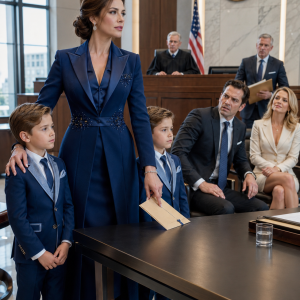
The Trial
The courtroom remained full for nearly three weeks.
Reporters lined the hallway every morning.
Grant never looked toward Mallory.
Cecily spent most of the proceedings writing notes that her attorneys rarely used.
The prosecution never portrayed Grant as a monster.
They portrayed him as something more believable.
A man who confused ownership with love.
Control with protection.
Obedience with stability.
The defense argued that Mallory suffered from mental illness.
Then forensic experts projected the forged commitment documents onto a large screen.
A handwriting analyst explained every inconsistency.
The notary admitted she had never actually witnessed Mallory sign the papers.
The final witness was Denise.
She described hearing locked doors.
Crying that stopped whenever footsteps approached.
She looked directly at the jury.
“I cleaned every room in that house.”
She paused.
“The only room nobody was allowed to clean was hers.”
No further questions were necessary.
The Verdict
The jury deliberated less than six hours.
Grant was convicted on multiple felony counts related to unlawful imprisonment, fraud, coercive control, financial exploitation, and evidence tampering.
Cecily was convicted for conspiracy, document fraud, and assisting the unlawful confinement.
As deputies escorted them away, Grant finally looked toward Mallory.
For the first time since the trial began, his confidence disappeared.
He opened his mouth.
Perhaps to apologize.
Perhaps to blame someone else.
Mallory simply turned away.
Some endings did not require hearing another word.
Spring Returns
Nearly a year later, Everett was back in his garden.
The Peace roses had survived another winter.
Their pale yellow blooms opened slowly beneath the morning sun.
A familiar car pulled into the driveway.
Mallory stepped out carrying a cardboard box.
She looked healthier.
Her hair had grown into soft curls around her face.
There were still difficult nights.
Still counseling appointments.
Still moments when an unexpected sound made her heart race.
Healing had not erased what happened.
It had simply made room for tomorrow.
She opened the box.
Inside were hand-painted signs for a new nonprofit support center where she had accepted a position helping survivors rebuild their lives.
“I thought one of these belonged here,” she said.
Everett lifted the smallest sign.
It read:
“Hope Grows Slowly.”
He smiled.
Together they placed it beside the first rosebush.
Neither of them spoke for a long while.
They simply stood in the quiet garden, listening to the wind move gently through the blossoms.
Some scars never disappear.
But when someone is believed, protected, and finally free, even the deepest wounds can become the place where hope begins to bloom.