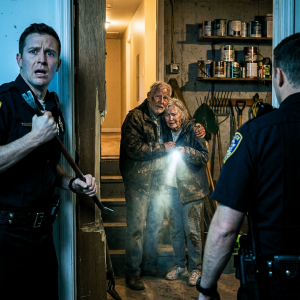
The phone call came just after noon, when the rain had begun to streak down the windows of my office in Ravensburg. The woman introduced herself as the school nurse. Her voice was calm, unnervingly so. I had spent years in uniform, and I knew the difference between panic and rehearsed control. That steadiness told me far more than panic ever could.
“Mr. Halberg,” she said, “your son Elias is in my office. He needs you to come immediately.”
I left work without remembering how. Traffic lights blurred into meaningless flashes of red and green. By the time I reached the school, my heart had slowed into the steady rhythm I once carried in combat zones.
Elias sat in a chair too large for his slight nine-year-old frame. His fists clenched, his face mottled by the beginnings of a bruise around his eye. I crouched in front of him, forcing calm into my voice. “Tell me what happened.”
His words shook, tumbling out like broken glass. “I went home for lunch. Mom was with Uncle Victor. I wanted to leave. He shoved me. Hit me with the door. Locked me in my room. I climbed out the window. They’re still there.”
A father should be shattered by betrayal. Instead, I felt everything sharpen. My wife. My brother. Together. I carried Elias to the car, speaking gently while my mind assembled each fact into a mission.
At urgent care, I held his hand while the doctor examined him. I bought him ice cream after, listened as he repeated the story for the officer who arrived to take notes. Outwardly, I was a steady father. Inwardly, I was cataloguing every detail, preparing for a campaign not fought overseas, but within my own walls.

That night, while Elias slept, I opened the family phone records. Dozens of late-night calls to Victor. Hours in length. Saved under the name of a “colleague.” Victor hadn’t had steady work in years.
The financial trail told the same story. Hotel rooms booked while I was away on conferences. Meals charged for two. Gas receipts from towns nowhere near her usual commute. It was not a mistake; it was a pattern.
I searched the house in silence. On her laptop, hidden but not erased, were photographs. The two of them, laughing, touching, in places sacred to me, our living room, our garden, even with Elias’s toys scattered in the background. They had turned my home into a theater for their deception.
I stayed quiet. Because silence is the sharpest weapon. They believed I was blind. They believed I was harmless. All the while, I was building the case.
The final proof came from the cameras. Small devices installed in the hallway and kitchen, explained away as simple security. She never questioned them. Why would she? Only guiltless people worry about cameras.