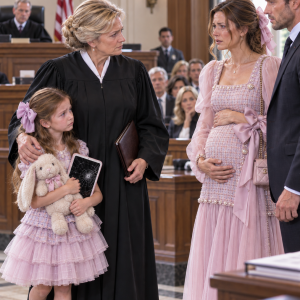
My employer approved remote work for the remainder of my pregnancy. As the contractions subsided, the baby’s movements strengthened, and every reassuring ultrasound made the future feel possible again.
After Eric began making court-ordered repayments, I rented a modest two-bedroom apartment in Lincoln Park. The furniture came from affordable stores, the kitchen lacked Judith’s expensive appliances, and the building possessed none of her home’s theatrical luxury.
However, morning sunlight filled every room, and the second bedroom slowly became a nursery.
On my first night there, I could not sleep because my body had learned to anticipate demands. I expected Judith to send messages about organic butter, missing flowers, or restaurant reservations. I expected Eric to ask whether his shirts had been ironed before complaining about my exhaustion.
Nothing happened.
Traffic moved distantly beyond the windows, pipes shifted inside the walls, and wind touched the branches outside. Eventually, I understood that silence could feel magnificent when it no longer represented a husband hiding behind a locked door.
Three months later, Eric requested a meeting about insurance documents. I selected a crowded coffee shop where private pressure would be difficult, and Rachel reviewed everything beforehand.
Eric arrived looking thinner, with gray beginning near his temples. His startup continued losing money, partly because he could no longer work uninterrupted while I quietly managed everything around him. Judith constantly called about groceries, utility bills, medical appointments, contractors, and household repairs.
“I understand why you became depressed around my family,” he admitted. “Mom expects every inconvenience to become someone else’s emergency.”
“She always behaved that way,” I replied. “You previously redirected those emergencies toward me.”
Eric nodded without arguing.
“I owe you more apologies than I could ever deliver.”
“I acknowledge that you finally understand part of the harm.”
Hope appeared across his face.
“Does that mean you might eventually forgive me and reconsider the divorce?”
“Forgiveness, if it comes, will release my anger,” I said. “It will not restore your access to my life.”
His shoulders lowered.
“I continued believing there might be another opportunity.”
“Stop building hope upon another reality that exists only because you prefer it.”
Eric asked whether the bucket of ice water had made reconciliation impossible. I looked through the window at pedestrians moving along the Chicago sidewalk.
“People imagine marriages die through dramatic betrayals, affairs, or bankruptcy,” I said. “Sometimes one small movement reveals every previous abandonment.”
“You mean the bucket?”
“I mean the lock turning after you decided my danger mattered less than your comfort.”
He lowered his head, and neither of us tried to protect him from the truth.
Part 7: The Son I Decided to Protect

Six months after that Thanksgiving, I delivered a healthy baby boy at Northwestern Memorial Hospital. I named him Caleb, while Carol remained beside me throughout labor.
Eric attended under boundaries established by our attorneys. He waited quietly near the other side of the room, followed every instruction, and made no effort to turn the birth into evidence that our marriage should continue.
When a nurse placed Caleb in his arms, Eric cried openly. For several seconds, I recognized the thoughtful college student I had once loved—the young man who discussed impossible inventions over inexpensive coffee and promised that we would build an equal marriage.
Then I remembered the husband who watched me clutch our unborn child before retreating behind a locked door.
Both versions belonged to the same person. I did not need to portray Eric as entirely monstrous before allowing myself to leave. He could love his son while having betrayed his wife. He could regret his conduct and remain responsible for it.
Our divorce became final several months later. Eric received parenting time structured around Caleb’s age and needs, while Judith’s access remained supervised. Eric continued repaying the money and attended individual counseling, although his progress no longer determined my future.
One afternoon, while I folded tiny clothes in Caleb’s nursery, Mallory sent me a photograph of Judith’s dining room. The long oak table that once held enormous family dinners stood empty beneath a visible layer of dust.
Judith had stopped organizing gatherings because nobody volunteered to replace my invisible labor. Eric moved into a small Evanston apartment to escape her constant demands, while Mallory visited only occasionally and refused every request to assume my former duties.
“Mom keeps saying the Bennett family collapsed when you carried your suitcase away,” Mallory wrote.
I looked toward Caleb sleeping peacefully before replying.
“Then it was never a healthy family. Healthy families do not collapse when one exhausted woman stops serving everyone.”
For years, I had accepted the belief that mature wives remained patient regardless of humiliation. Women were expected to tolerate cruel relatives, absent husbands, unequal labor, emotional neglect, and financial deception because preserving the household supposedly mattered more than protecting themselves.
However, a home that survives only because one woman repeatedly uses her body, money, and silence to extinguish everyone else’s fires is not a home. It is a furnace sustained by consuming its most dependable person.
Part 8: Refusing to Call Endurance Love
Judith required an ice-filled bucket to reveal the full depth of her cruelty, while Eric needed only the quiet movement of turning a lock. One action was dramatic enough to horrify witnesses, while the other seemed small enough to overlook.
The quiet betrayal changed me more profoundly because it exposed the structure beneath everything else. Eric had always disappeared when defending me required conflict. He called avoidance peace, described exploitation as family obligation, and treated my endurance as an unlimited resource.
Leaving did not immediately heal every wound. For months, I apologized whenever Carol helped with Caleb, even though she repeatedly assured me that love did not create debt. I felt guilty while resting, hesitated before spending my own money, and occasionally reached for my phone because my body expected another demand from Judith.
Therapy helped me separate generosity from submission. Generosity was voluntary and could exist beside firm boundaries. Submission began whenever safety, belonging, or affection depended upon obedience.
Eric gradually became more dependable during his scheduled visits with Caleb. He arrived on time, followed medical instructions, and stopped asking me to manage his conflicts with Judith. Those improvements benefited our son, but they did not rewrite our marriage.
On Caleb’s first Thanksgiving, Carol hosted a small dinner in her Oak Park home. Nobody woke before sunrise, nobody judged the gravy as though national honor depended upon it, and nobody expected a pregnant woman to serve twenty guests alone.
Eric collected Caleb for several afternoon hours and returned him peacefully. At the doorway, he paused beside the diaper bag.
“Mom expects me at her house tonight, but she ordered enough prepared food for four people,” he said. “She finally hired a catering company without calling it a moral collapse.”
“That sounds like progress, even though it arrived very late.”
He nodded and looked toward Caleb.
“I want him to understand that love never entitles anyone to another person’s labor.”
“Then teach him through your behavior instead of expecting words to accomplish everything.”
After Eric left, I carried Caleb into the warm kitchen where Carol was serving pie. The holiday had no imported wine, perfectly arranged table, or exhausting performance Judith had called tradition.
Nevertheless, it possessed something her celebrations had never offered.
Everyone present could rest without losing the right to belong.
Later that night, I opened the nursery window slightly and allowed cool Chicago air to move through the white curtains. Caleb slept nearby with one hand curled beside his cheek, completely unaware of the family structure I had dismantled before his birth.
I once believed protecting my child required preserving my marriage regardless of the personal cost. Eventually, I understood that raising him inside a home governed by deception, fear, and compulsory sacrifice would only teach him to repeat those patterns.
Saving Caleb and saving myself began with the same decision. I stopped confusing endurance with devotion and refused to offer another generation to a family system sustained by silence.
The most important moment was not the freezing water striking my body. It was not discovering the nonexistent mortgage, signing the separation agreement, or receiving the final divorce judgment.
The decisive moment arrived through a nearly inaudible click across Judith’s hallway. Eric turned the lock because he believed I would continue absorbing everything waiting outside his protected room.
He was wrong.
That sound did not trap me with his mother.
It finally showed me where the exit had always been.
THE END