“Your husband’s in Charleston. Working at a marina under a fake name.”
Claire didn’t hesitate. She flew south.
At the marina, she spotted him—tanned, leaner, laughing with strangers, cap pulled low. Alive. That night, she stared at her hotel mirror, torn between walking away or confronting him. She chose the latter.
When Michael opened the door of his shabby apartment, the color drained from his face.
“Claire,” he stammered.
“Surprise,” she said coldly, stepping inside.
He muttered about debts, “dangerous people,” but Claire already knew the truth—gambling, hidden loans, secret lives. Not survival. Cowardice.
“You left me with bills, grief, and shame,” she said, voice sharp. “You wanted me to cash your life insurance while you played ghost. You thought I’d clean up your mess.”
She pulled photos from her bag—proof of the storage unit, the fake IDs, the cash. His face went pale.
“You tracked me?” he whispered.
“That’s right,” she replied. “And now you’ll face everything you tried to escape.”
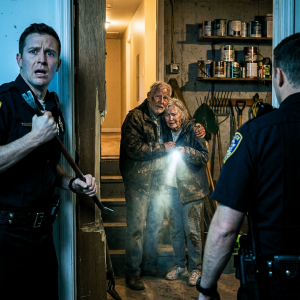
The next morning, Michael was in handcuffs. Fraud, faked death, false identities—exposed. Claire had tipped off police and the insurance company. He glared at her like she had betrayed him, but she felt only relief.
News headlines erupted: “Connecticut Man Fakes Death, Wife Outsmarts Him.”
Neighbors whispered, reporters camped outside, but Claire refused to hide. She turned betrayal into strength—writing a memoir, speaking at women’s conferences, and reshaping her pain into purpose.
On stage months later, she told a cheering crowd: “Sometimes the people closest to you write your tragedy. But you decide if it stays a tragedy—or becomes your victory.”
And Claire Dawson smiled, finally free.