
— Matthew Dominick (@dominickmatthew) September 19, 2024
How and where can I see it?
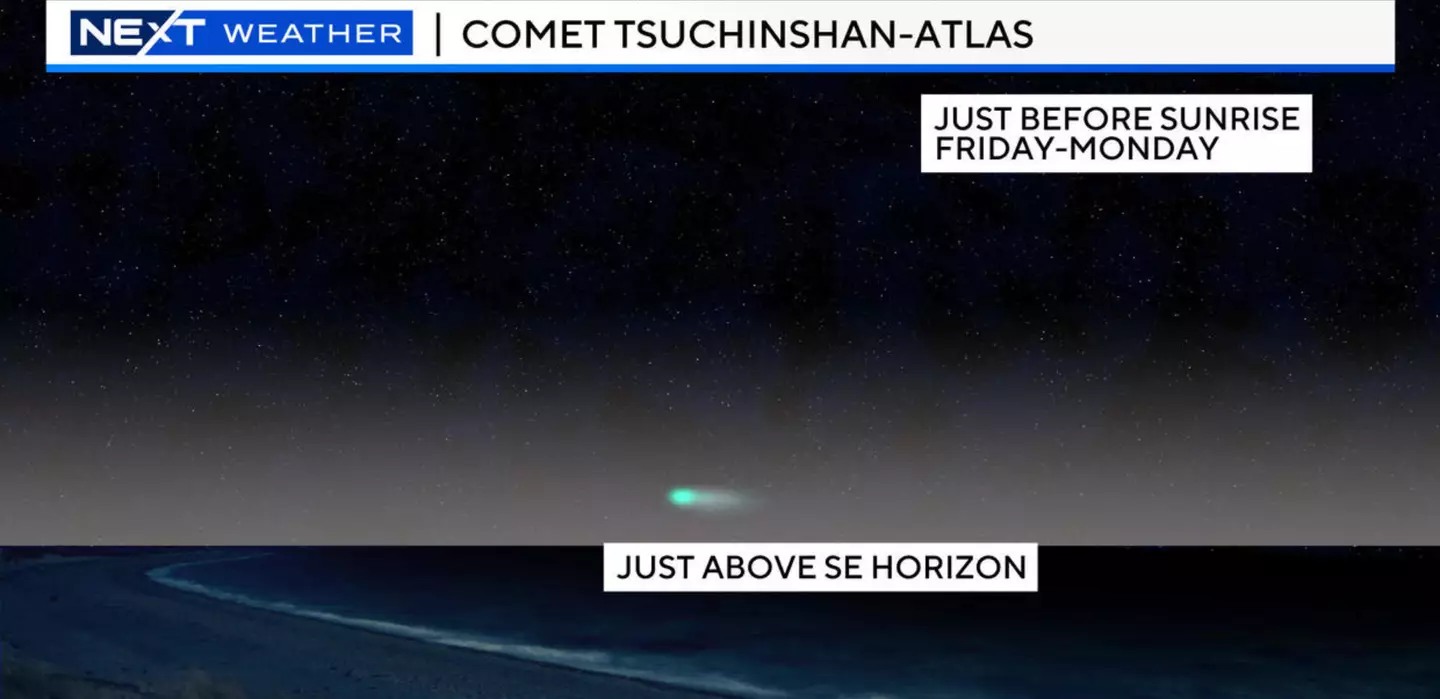
While it ultimately depends on where in the world you’re located, those of you in the northern hemisphere will look towards the east-southeastern horizon about an hour before sunrise, according to VT.
CBS News also reports that the comet will be a few degrees above the ESE horizon and will be visible for an hour before sunrise – so best be quick.
While the angle could make it difficult for some people to see the astronomical event, some experts say the comet will be bright enough to see without a telescope, however, according to Live Science, it’s best to have one or a pair of binoculars to hand as comets can be fickle.
As for when it returns in October, it is believed that the comet will be visible looking towards the west soon after sunset.
This, of course, means that it will be passing the Earth closer to the Sun, where it could become lost in the Sun’s glare.
However, comets are hard to predict even just a few weeks in advance, so knowledge about Comet-C/2024 A3’s second stint of visibility is not as certain as its current one.
Happy comet hunting.


