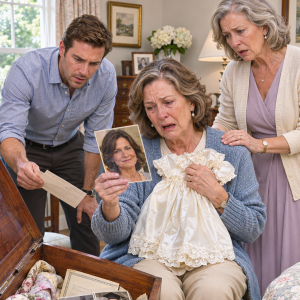
The Day My Husband Inherited Millions, He Told Me to Pack My Bags After 42 Years of Marriage
The message arrived on an ordinary Tuesday afternoon, just as I was setting two coffee mugs on the kitchen counter.
“I just inherited millions of dollars! Pack your things. I want to start a new life, and you’re not part of it anymore.”
I stared at my husband’s words, reading them twice before I could believe what I was seeing.
After forty-two years of marriage, three children, and a lifetime of standing beside him, my husband had decided that money was more important than the woman who had helped him build his life.
What he didn’t know was that his sudden fortune would change both our lives in ways neither of us could have imagined.
And months later, when my phone rang and I heard his familiar voice, I finally understood something I should have learned years earlier.
Sometimes, losing the life you thought you wanted is the beginning of finding the one you truly deserve.
Chapter 1: Forty-Two Years of Building a Life Together

My name is Rebecca Whitfield, and I was sixty-four years old when my husband decided our marriage had reached its expiration date.
We lived in a comfortable two-story house outside Columbus, Ohio. It wasn’t extravagant, but every room held a memory.
There were photographs of our children on the staircase, family recipes tucked into kitchen drawers, and an old oak dining table where we had celebrated birthdays, graduations, and countless holidays.
My husband, Thomas Whitfield, had spent most of his career working in commercial insurance.
I had worked as an elementary school librarian for nearly thirty years, retiring only two years earlier.
We were never wealthy, but we had always managed.
When Thomas lost his job during an economic downturn, I took extra shifts at the public library. When his father needed help with medical appointments, I rearranged my schedule to make sure someone could drive him.
I never considered those sacrifices extraordinary.
To me, that was marriage.
We had raised three wonderful children: our eldest daughter, Allison, our son, Peter, and our youngest daughter, Natalie.
They had grown into independent adults with families and careers of their own.
I thought Thomas and I were finally entering the peaceful chapter we had worked so hard to reach.
We had even talked about traveling after his retirement.
I wanted to see the California coastline. Thomas dreamed of buying a boat.
But somewhere along the way, the man I had married began changing.
He became impatient with our routines. He complained about the house, our neighborhood, and the quiet evenings I enjoyed.
“Don’t you ever get tired of living the same day over and over?” he asked one evening.
I smiled and answered, “I thought growing old together was something we were supposed to look forward to.”
He didn’t smile back.
At the time, I dismissed his behavior as ordinary restlessness.
I had no idea he was already imagining a future without me.
Chapter 2: The Message That Changed Everything
The news about the inheritance came from Thomas’s late uncle, who had owned several commercial properties in Pennsylvania.
We knew his uncle had been financially comfortable, but we never imagined he had left Thomas a substantial portion of his estate.
When Thomas first heard about the inheritance, he was thrilled.
“Rebecca, do you understand what this means? We might finally be rich!”
I hugged him.
“Then maybe we can take that trip we’ve been talking about.”
He pulled away slightly.
“We’ll see. There are a lot of things I want to do first.”
Over the following weeks, he spent hours speaking with attorneys and financial advisers.
He became increasingly secretive about the estate.
Whenever I asked questions, he brushed them aside.
Then came that Tuesday afternoon.
I had just returned from the grocery store when my phone buzzed.
Thomas’s message appeared on the screen.
“The inheritance is official. I’m going to have more money than I ever dreamed of. Pack your things, Rebecca. I want the house to myself. I’ve met someone, and we’re going to enjoy this money together.”
For several moments, I couldn’t move.
I called him immediately.
He answered after the fourth ring.
“Thomas, what is this supposed to mean?”
His voice was strangely casual.
“It means exactly what I said. I’ve spent my whole life working, and now I finally have a chance to enjoy myself.”
“And you can’t enjoy yourself with your wife?”
He sighed.
“Rebecca, we’ve been married for forty-two years. Don’t you think we’ve done enough together?”
I looked around our kitchen, remembering all the evenings I had waited for him to come home.
“Who is she?” I asked.
There was a pause.
“Her name is Sabrina. She’s forty-eight. She makes me feel excited about life again.”
I closed my eyes.
“And what am I supposed to do?”
“You’ll be fine. We can work something out financially. I just think it’s time we went our separate ways.”
That was how my husband ended our marriage.
Not with a difficult conversation across the kitchen table, but with a text message and a promise that money would solve everything.
Chapter 3: The Woman Sitting in My Kitchen
Thomas returned home that evening with Sabrina.
I was sitting at the dining table when they walked through the front door.
Sabrina was attractive, with carefully styled blonde hair and an expensive-looking cream coat.
She appeared uncomfortable when she saw me.
Thomas, however, acted as though he had already settled everything.
“Rebecca, this is Sabrina. I thought it would be easier if everyone met.”
I looked at him in disbelief.
“You brought her into our home before we’ve even discussed what happens next?”
He shifted his weight.
“I don’t want to make this more difficult than it needs to be.”
Sabrina finally spoke.
“I know this must be awkward, but Thomas says you two haven’t been happy for years.”
I turned toward her.
“That’s interesting, because until this afternoon, I believed we were planning our retirement together.”
She looked away.
Thomas cleared his throat.
“There’s no reason to argue. We can handle everything like adults.”
I studied the man sitting across from me.
He looked confident, almost relieved, as though the inheritance had given him permission to abandon every responsibility he no longer wanted.
For years, I had been the one smoothing over disagreements, making compromises, and protecting the peace in our home.
But something inside me had finally grown quiet.
“You’re right, Thomas,” I said. “There’s no reason to argue.”
He looked surprised.
“So you’ll move out?”
“I’ll speak with an attorney, and we’ll divide our property fairly. After that, I’ll leave.”
His shoulders relaxed.
I realized then that he had expected tears, pleading, and a long argument.
Instead, I gave him the one thing he hadn’t prepared for.
My acceptance.
Chapter 4: Leaving Behind the Life I Knew
The following weeks were filled with paperwork, meetings, and difficult conversations.
I hired a family-law attorney named Katherine Brooks, who carefully reviewed our finances.
She explained that the inheritance itself would generally be considered Thomas’s separate property under Ohio law, provided it remained separate, but our marital assets still needed to be divided fairly.
Fortunately, I had my retirement savings, and we had substantial equity in our home.
After negotiations, Thomas agreed to buy out my share of the property.
I didn’t ask for anything unreasonable.
I wanted enough to begin again without worrying about my financial future.
When our children learned what had happened, they were stunned.
Allison drove over that weekend.
Related Posts

“Couldn’t Find a Man Your Own Age, So You Found Yourself a Sugar Daddy?” My Ex-Husband’s Fiancée Laughed Loudly Enough for the Whole Restaurant to Hear. My Ex-Husband Smirked Until He Took a Closer Look at the 63-Year-Old Man’s Face. Then His Wineglass Slipped From His Hand. “Mr. Whitlock?” He Whispered. I Hadn’t Planned to Say a Word About Who I Was Having Dinner With. But When the Man Opened His Leather Folder and Asked My Ex-Husband One Question, I Realized There Was Something About Our Divorce I Still Didn’t Know.
“You and Your Daughter Have 30 Days to Leave,” My Mother-in-Law Said Just Three Weeks After My Husband Passed Away—So I Took the Sealed Envelope He Had Hidden in Our Safe to His Attorney, and the Moment He Read the First Line, He Locked the Door and Whispered, “You Need to Know What Your Husband Left Behind”
“We Only Took You In for the Money!” My Mother Laughed at Her 35th Anniversary Dinner, and 60 Guests Laughed Along. Then My Father Added, “You Were Never as Smart as Our Real Daughter.” I’d Heard Their Cruel Jokes for 33 Years, but That Night, I Wasn’t Laughing. I Reached Into My Purse, Pulled Out a Brown Folder, and Said Five Words: “I Found the Original Agreement.” My Mother’s Smile Vanished. Then She Said Something That Told Me She Knew Exactly What I’d Found.

Hours After I Gave Birth, the Hospital Told Me I Couldn’t Afford Another Night—Then My Billionaire Grandfather Saw My Worn Hands and Asked About the $250,000 He’d Sent Me Every Month. I Whispered That I’d Never Seen a Dollar, and Just as His Expression Changed, My Husband Walked In Smiling With Designer Shopping Bags…