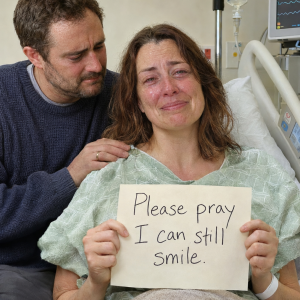
“It may be complicated, honey, but that doesn’t mean the truth gets to disappear.”
The Secret Beneath the Farmland
The next afternoon, I received a call from a man named Peter Langley, an employee of the county property records office.
He said he had information concerning the Whitfield family and asked whether we could meet somewhere outside Briar Glen.
I was cautious, particularly after the hospital encounter, but a federal investigator assigned to review the matter agreed to arrange a properly documented meeting.
We gathered at a small diner in a neighboring county, where Peter arrived carrying a canvas briefcase and looking as though he had not slept properly in weeks.
He was a quiet man in his late forties, with thinning hair and the careful manner of someone accustomed to being overlooked.
After introducing himself, he explained that he had worked in county administration for almost seventeen years.
During the previous year, he had begun noticing unusual patterns in land purchases around the eastern edge of Briar Glen.
Several companies with different names had acquired neighboring properties, often at prices considerably below their potential development value.
The companies appeared unrelated on paper, but their ownership records repeatedly led back to relatives, associates, or business partners of Harold Whitfield.
“At first, I thought it was ordinary speculation,” Peter told us. “Then I found the proposed transportation corridor.”
He opened a folder and spread a planning map across the table.
A new state highway bypass had been proposed to relieve congestion along the existing commercial route.
Although the project had not yet been publicly announced, preliminary plans placed a major interchange near the property held in Natalie’s trust.
Peter pointed toward the center of the map.
“This is your daughter’s land.”
The forty-six acres lay directly beside the proposed interchange.
According to preliminary commercial estimates, the property could become worth several million dollars if the project received final approval.
I stared at the map, remembering Russell’s insistence that Natalie sign away her inheritance.
“So they knew the land was about to become valuable.”
Peter nodded.
“And they wanted control before anyone else found out.”
He explained that other landowners had complained about unusual pressure to sell, followed by unexpected inspection problems, permit delays, or repeated visits from county officials.
Some had eventually accepted offers simply because they were tired of fighting.
Peter had quietly preserved copies of public records and submitted concerns through official reporting channels, but he feared that local relationships would prevent a meaningful investigation.
“Harold has friends everywhere,” he said. “People are afraid of losing their jobs, their businesses, even their standing in the community.”
I thought about the people I had known during my marriage, including neighbors who lowered their voices whenever the Whitfield family was mentioned.
For years, I had assumed their silence came from indifference.
Now I wondered how many had been frightened into believing that speaking openly would only make their circumstances worse.
The investigator carefully collected Peter’s documents for review, explaining that any evidence would need to be authenticated before conclusions could be drawn.
As we prepared to leave, two county vehicles pulled into the parking lot.
Sheriff Lawrence Whitfield, Harold’s nephew, stepped out with Deputy Rourke and two other officers.
The sheriff entered the diner wearing a broad smile that never reached his eyes.
“Well, Caroline Foster. I heard you were back in town.”
I remained seated.
“Sheriff.”
He glanced toward Peter’s briefcase.
“Looks like you’ve been keeping interesting company.”
The federal investigator introduced herself and explained that Peter was participating in an authorized interview.
Lawrence’s smile faded.
“County records belong to the county.”
“The handling of these documents is being reviewed through the appropriate legal process,” she replied. “If your office has concerns, you can address them through counsel.”
For a moment, the sheriff appeared ready to argue.
Then he noticed another federal vehicle arriving outside.
His posture changed.
He stepped away from our table, spoke briefly with his deputies, and left without another word.
Peter watched through the window until the vehicles disappeared.
“I’ve never seen him walk away from an argument,” he murmured.
I looked at the folder still lying between us.
For the first time since Natalie’s call, I felt that the truth might have a chance to emerge.
The People Who Refused to Look Away

Over the following weeks, investigators began examining the property transactions, trust documents, financial arrangements, and complaints connected to the Whitfield family’s business interests.
The inquiry expanded when records suggested that certain county contracts had been awarded to companies associated with Harold’s relatives without adequate disclosure.
More troubling was the discovery that several landowners had reported intimidation before selling their properties.
Some of those complaints had been closed with little explanation.
Others had never been entered properly into the county’s records.
A detective named Julia Moreno became an important witness.
Julia had originally been assigned to Natalie’s case, but she was removed after refusing to characterize the incident as a minor disagreement between relatives.
Before losing access to the investigation, she had preserved her original notes, dispatch records, and a copy of traffic camera footage showing Russell’s pickup traveling toward the warehouse district on the evening Natalie disappeared.
Her decision had placed her career in jeopardy.
When I met her, I asked why she had taken such a risk.
She gave me a tired smile.
“Because your daughter deserved someone who would write down what actually happened.”
That simple answer moved me more than any elaborate speech could have.
For years, I had associated courage with military service, yet here was a woman who had risked her livelihood simply by refusing to change a report.
The investigation also uncovered draft documents prepared by a law office connected to the Whitfield family.
Several versions contained signatures that Natalie insisted she had never provided.
A handwriting examination raised serious concerns about their authenticity, while financial records suggested that companies connected to Harold were positioned to benefit from the transfer.
As the evidence accumulated, investigators obtained warrants and began questioning people who had once been reluctant to speak.
Russell and Wade were taken into custody.
Sheriff Lawrence was placed under investigation for his handling of the original complaints.
Harold’s financial dealings became the subject of a broader inquiry into improper influence and misuse of public office.
Eleanor, whose confident voicemail had initially seemed like little more than an unpleasant family message, was questioned about her knowledge of the efforts to pressure Natalie.
The investigation was neither immediate nor simple.
There were delays, legal challenges, conflicting statements, and many days when it seemed that every new discovery produced another unanswered question.
But something important had changed.
People who had once believed the Whitfields could control every outcome began coming forward.
A retired contractor described being pressured to abandon a bid.
A widow produced letters showing repeated efforts to persuade her to sell her farm.
A former county employee provided records of questionable payments.
Each person contributed another piece of a much larger story.
And as those pieces came together, the family’s carefully maintained reputation began to unravel.
Learning How to Live Again
While the investigation moved forward, Natalie faced a much quieter struggle.
Her physical recovery required several procedures, months of rehabilitation, and countless appointments with specialists who helped her regain strength and movement.
Some mornings she woke feeling hopeful, only to become discouraged when an ordinary task reminded her how much she had lost.
There were days when fastening a button seemed impossible, when holding a coffee cup caused discomfort, or when an unexpected sound outside her apartment brought back memories she desperately wanted to leave behind.
I had taken extended leave during the early stages of her recovery, and although I eventually returned to military duties, I arranged my schedule to spend as much time with her as possible.
One afternoon, while we were sitting together after a therapy appointment, Natalie asked a question that caught me unprepared.
“Mom, do you think I’ll ever feel normal again?”
I considered offering the sort of confident reassurance I had given younger soldiers throughout my career.
Instead, I told her the truth.
“I think your life will feel like yours again, sweetheart. Maybe not all at once, and maybe not exactly the way it used to, but I believe you’ll find your way.”
She looked down at her hands.
“I hate that they made me afraid of things I never used to think about.”
“I know.”
“Sometimes I feel like they’re still controlling my life, even though they’re not here.”
I reached across the table.
“Then we’ll keep finding little ways to take that control back.”
And that was what she did.
She returned to graduate school on a reduced schedule, moved into a brighter apartment near campus, and began seeing a counselor who helped her work through the emotional effects of what had happened.
She also adopted an orange-and-white rescue cat named Biscuit, a remarkably demanding creature who insisted on sleeping across her textbooks.
At first, I thought the cat was an unnecessary complication.
Then I watched Natalie laugh when Biscuit climbed into an empty laundry basket and refused to come out.
It was the first completely carefree laugh I had heard from her in months.