She bought three on the spot and invited me to exhibit next month.
I nearly said no—no babysitter, no clothes—but Mrs. Bennett insisted, lending me a dress and watching Lily herself. That night changed everything.
My work sold out. Commissions, interviews, magazine features followed. My story spread: abandoned wife, single mother, survivor.
I didn’t gloat. I didn’t seek revenge. But I never forgot.
Five years later, the Halloway Cultural Foundation invited me to collaborate. They didn’t know who I was. Leadership had shifted, and they needed fresh faces.
I entered the boardroom with Lily—now seven—beside me. Nathaniel was already seated. He froze when he saw me.
“Emily?” he whispered.
“Ms. Emily Carter,” the assistant corrected. “Our guest artist.”
I placed my portfolio on the table. “This exhibition is called Resilient. It’s a journey through betrayal, motherhood, and rebirth. Every dollar raised will support single mothers and children in crisis.”
The room fell silent. His mother, frail in a wheelchair, looked stunned. Nathaniel’s lips parted, but I cut him off. “You had a choice. And you closed the door.”
When Resilient opened in Tribeca, its centerpiece—The Door—depicted a woman holding a child at the gates of a mansion, eyes blazing with pain and determination. Critics hailed it a triumph.
Nathaniel came. He looked older, worn. “I never meant to hurt you,” he said.
“I believe you,” I answered. “But you let it happen.”
“Is there anything I can do now?”
“Not for me,” I said softly. “Maybe one day Lily will decide for herself.”
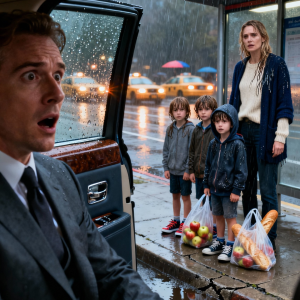
Years later, I opened The Resilient Haven, a nonprofit offering shelter, childcare, and art therapy for single mothers. Not for revenge—but so no woman holding her baby in the rain would feel as alone as I once did.
One evening, Lily—now twelve—played piano as other children laughed around her. I stood by the window, watching the sunset, and whispered with a smile:
“They didn’t break me. They gave me space to rise.”