The Price of Leaving

My husband placed the divorce agreement beside my untouched plate as calmly as if he were handing me a quarterly report.
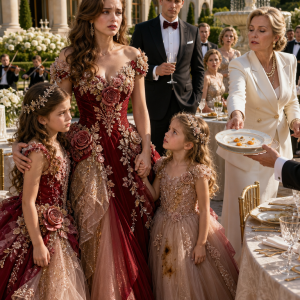
We were sitting in the formal dining room of our Beacon Hill townhouse, beneath the antique brass chandelier I had spent three months restoring. Across the table, Richard Hollis wore a perfectly tailored navy suit, his expression composed and distant. His mother, Constance, occupied the chair at the head of the table, as she had during every holiday, anniversary, and important family discussion throughout my twelve-year marriage.
Near the tall windows stood Richard’s former communications director, twenty-six-year-old Brianna Cole, dressed in pale blue silk with one hand resting beneath her seven-month pregnancy.
She was carrying twins.
Richard folded his hands.
“Brianna is expecting two daughters. My family wants them born into a stable household.”
I looked at the document. The settlement offered me fifty million dollars if I resigned from the board of Hollis Heritage Hotels, surrendered the townhouse, waived future claims, and agreed not to discuss the circumstances publicly.
Constance tapped the contract with one polished fingernail.
“It is an extraordinarily generous offer, Julia. Many women in your situation receive far less.”
“What situation would that be?”
Her eyes lowered briefly toward my waist.
“A marriage that failed to produce the next generation.”
Richard stared at his wineglass.
For years, I had attended medical appointments alone, endured treatments that left me exhausted, and listened while his mother made delicate jokes about my inability to give the family what it wanted. Richard always said confronting her would make things worse.
Apparently, carrying on an eighteen-month relationship with an employee had seemed easier.
A gold-and-pearl pin shimmered at Brianna’s collar. Richard had given it to me on our tenth anniversary, then insisted it must have disappeared during one of our hotel renovations.
“Did you give her my pin before or after she became pregnant?” I asked.
Richard’s jaw tightened.
“That has nothing to do with the agreement.”
“It has everything to do with the kind of man asking me to sign it.”
Constance sighed.
“Please stop making Brianna uncomfortable. Stress is not good for the babies.”
For twelve years, my discomfort had been treated as an inconvenience. Brianna’s discomfort had already become a family concern.
I picked up the pen.
Richard looked surprised.
“You should read everything first.”
“My attorney already has.”
I signed each marked page, removed my wedding ring, and placed it on top of the contract.
Then I stood.
“My bags are in the car.”
Richard’s face changed.
“You packed already?”
“Three days ago.”
That was the moment he understood. He had believed he was dismissing me from his life, but I had already been preparing to leave it.
The Child He Never Asked About
As I reached the doorway, Constance called after me.
“You should be grateful. Fifty million dollars is considerable compensation for twelve comfortable years.”
I turned back.
“Comfortable?”
The room became still.
“Was it comfortable when I woke up after a procedure and discovered Richard had sent a driver instead of coming himself? Was it comfortable when you told your friends my body was useless? Was it comfortable when my pregnancy ended in a hospital room while your son was supposedly attending a business conference?”
Richard rose so quickly that his chair scraped the floor.
“What pregnancy?”
I met his eyes.
“The one you never bothered to ask about.”
Brianna lowered her hand from her stomach. Constance’s confident expression faded.
Richard stepped toward me.
“Julia, what are you talking about?”
“The final treatment worked. There was a heartbeat at eight weeks. Then the pregnancy ended. The specialist determined that your genetic condition had contributed, but I never told your mother because I knew she would make you feel ashamed.”
His lips parted, but no words came.
“You were with Brianna the night I went through it alone,” I continued. “So do not call the money a gift. Consider it the cost of everything you chose not to see.”
I left before anyone could answer.
The September air felt sharp against my face as I crossed the stone courtyard. From the sidewalk, the townhouse appeared warm and dignified, the kind of home photographed for magazines about old Boston families.
That had always been the Hollises’ greatest skill. They could make indifference look elegant.
My phone confirmed that the settlement had reached my account before the car arrived at Logan Airport. Richard called repeatedly. I turned off the phone and boarded a flight to Santa Barbara.
When I switched it on again, there were dozens of missed calls.
The final message from Richard read:
“Please come home. I didn’t know.”
Constance had written as well:
“Return the money or return to your husband. Brianna’s pregnancy is becoming complicated, and this family cannot lose its future.”
I deleted her message.
Then I looked up and saw Thomas Reed waiting beside the baggage carousel with two coffees and a familiar, crooked smile.
Thomas and I had known each other during graduate school in Chicago, when I studied museum exhibition design and he trained as a landscape architect. We had once been inseparable, but Richard entered my life with confidence, wealth, and a future that seemed carefully arranged.
Thomas moved west. I married Richard.
Six months before the divorce, after another lonely appointment, I had called Thomas for the first time in years. He listened for nearly two hours.
Before we ended the call, he had said only one thing.
“When you are ready to leave, call me. You won’t have to land somewhere alone.”
He had kept his promise.
The Woman Who Came West

Thomas had rented a small furnished apartment for me near the Santa Barbara waterfront. There were groceries in the refrigerator, clean towels in the bathroom, and a vase of yellow tulips on the kitchen table.
“You remembered,” I said.
“You used to buy them whenever winter lasted too long.”
During my first weeks in California, Richard sent apologies every day. He apologized for the missed appointments, his mother’s remarks, the stolen jewelry, and the affair.
Then he wrote something that explained our marriage better than any apology could.
“I thought you were happy because you rarely complained.”
My silence had made his life convenient, so he had mistaken it for peace.
Three weeks after I arrived, Constance appeared at an outdoor restaurant where Thomas and I were reviewing plans for a small design consultancy.
She wore a red linen coat despite the warm afternoon.
“Julia!” she called, opening her arms. “There is my daughter.”
I remained seated.
“I stopped being your daughter when you invited another woman to my divorce dinner.”
Thomas quietly moved to a nearby table.
Constance sat across from me without waiting for an invitation.
“Richard is falling apart. He sleeps in his office. He barely eats.”
“Then he needs a counselor.”
“He made a mistake.”
“Eighteen months of secret hotel rooms requires planning. That is not one mistake.”
Her mouth tightened.
“Brianna may deliver early. One baby is much smaller than the other.”
I waited, already knowing there was more.
Constance lowered her voice.
“If the babies do not remain healthy, Richard will have no children.”
“So you came here because you want me to return as your backup plan.”
“That is an ugly way to describe it.”
“It is exactly what you are describing.”
She reached for my hand. I moved it away.
“Now that we know you became pregnant once, perhaps the doctors could try again.”
“You also know Richard’s medical condition played a role.”
Something flickered across her face.
I understood immediately.
“You saw the report.”
She looked toward the harbor.
“A copy arrived at the townhouse.”
“And you hid it.”
“I was protecting my son’s confidence.”
“By allowing me to believe everything was my fault.”
“Richard was already under enormous pressure.”
“So you protected his pride by dismantling mine.”
For the first time since I had known her, Constance had no polished response.
I stood and picked up my purse.
“Brianna is not your solution. I was never your solution. Children are people, not proof that your family name will continue.”
As I walked away, Constance called after me.
“You took fifty million dollars from us.”
I turned.
“Richard offered it because he believed money could purchase my silence. I accepted because it was the first honest exchange anyone in your family ever offered me.”
A Call After Midnight
Several weeks later, my phone rang shortly after one in the morning.
Brianna’s name appeared on the screen.
When I answered, I could hear hospital equipment in the background.
“Julia,” she whispered. “Can I ask you something?”
“What is it?”
“When your pregnancy ended… was it painful?”
I sat upright in bed.
“Yes.”
“Richard told me about the injections and procedures. Were you afraid?”
“Almost every day.”
Her breathing became uneven.
“One of the twins may need to arrive early. Richard keeps saying we have excellent doctors, but he looks completely lost. Constance says I caused this because I didn’t rest enough.”
“Are you under medical care?”
“Yes.”
“Then listen to your physician, not Constance.”
She was quiet for a long moment.
“Do you hate me?”
I looked through the window at the dark water.
“I hated what you did. You entered my home, wore my jewelry, and watched me sign those papers as though you had won.”
“I thought I had.”
“You did not win Richard. You inherited all the responsibilities he avoided with me.”
A soft sob came through the phone.
“He is not cruel all the time,” I said. “But he disappears when love becomes uncomfortable. Unless he changes, you may find yourself alone inside the same relationship.”
“What should I do?”
“Protect your children. Keep control of your finances. Maintain your ability to work and leave. You were a person before Richard, and you will remain one whether the Hollises approve of you or not.”
Before ending the call, Brianna whispered,
“I am sorry.”
I was not ready to forgive her, but I believed she meant it.
Two months later, she delivered twin girls. Caroline was small but stable. Rose required several weeks of specialized care.
Richard spent the first night sitting outside the neonatal unit, staring through the window because he was afraid to hold his daughter.
He sent me one message.
“I finally understand what it means to be surrounded by people and still feel completely alone.”
I replied:
“Then make sure Brianna does not feel that way.”
After that, his messages changed. He stopped asking me to return. He began telling me about counseling, medical appointments, and the boundaries he was finally establishing with his mother.
It could not repair our marriage, but perhaps it could improve the kind of father he became.
Building Something of My Own

With part of the settlement, I opened Mercer Story Spaces, a studio that designed museums, libraries, and historic public buildings.
Thomas helped me renovate an old stationery shop near State Street. Its floors sloped, the wiring needed replacement, and the windows rattled whenever the ocean wind grew strong.
I loved every imperfect inch of it.
When I offered Thomas a share of the company, he refused.
“Why?” I asked.
“Because this should belong entirely to you.”
One afternoon, I found an old photograph in his office. I was twenty-two, sitting on the steps outside our university building while Thomas held an umbrella over me.
“You kept this?”
“I forgot it was there.”
“It was inside an envelope labeled with my name and the date.”
He smiled.
“Fine. I did not forget.”
I studied the way his younger self had looked at me.
“Were you in love with me?”
Thomas leaned against the desk.
“Would the answer change anything?”
“I don’t know.”
“Then I don’t want to turn it into pressure.”
“That is not an answer.”
He sighed.
“Yes, Julia. I loved you. Then you chose someone else, so I learned how to care about you from a respectful distance.”
“And now?”
“Now you are rebuilding. I will not turn your freedom into another obligation.”
He walked past me, but I caught his hand.
“I don’t know what I can offer.”
“I am not asking for anything.”
That answer frightened me more than a demand would have, because it felt safe.
By spring, the studio had five major clients. One of them came through Brianna, who had separated from Richard and started consulting for independent hotel groups.
We kept every conversation professional.
Then a national television program invited me to discuss marriage, fertility treatments, financial independence, and rebuilding a career after years of emotional neglect.
The interview was scheduled in Boston.
After the recording, I stepped outside and found Richard waiting beside a black car.
He looked older and thinner.
“You knew about the pregnancy before the divorce,” I said.
His face tightened.
“Brianna told you.”
“You discovered the truth before your affair began. Instead of coming home, you went to her.”
“I felt ashamed.”
“So you allowed me to carry the shame for you.”
He lowered his head.
“I thought if Brianna gave me healthy children, it would prove there was nothing wrong with me.”
“And when her pregnancy became complicated?”
“I finally understood that children are not proof of anything.”
Traffic moved behind us.
“I did love you,” he said.
“You loved the peaceful life I created around you. But whenever loving me required courage, you disappeared.”
His eyes filled.
“Can you forgive me?”
“I can stop carrying anger. That does not mean reopening the door.”
“Is there someone else?”
I thought of Thomas waiting in California without demanding to know when I would return.
“There is someone who knew how to stand beside me long before I understood I deserved it.”
The Truth Richard Finally Told
Three months later, Constance told reporters that I had manipulated Richard into paying me fifty million dollars.
My attorney recommended legal action, but before we filed anything, a reporter confronted Richard during the annual Hollis Heritage shareholder meeting.
For most of his life, Richard would have protected his mother.
This time, he stood behind the podium and told the truth.
“Julia Mercer did not take anything from my family. I proposed the settlement after maintaining a long relationship with an employee, concealing medical information, and allowing my wife to carry blame that did not belong solely to her.”
Constance rose from the front row.
“Richard, stop this immediately.”
He continued.
“Julia went through years of treatment and the ending of a pregnancy without my support. I offered the settlement because I wanted a fast divorce before my other relationship became public. She fulfilled every legal obligation.”
Then he looked directly at his mother.
“My mother saw the medical report and hid it because protecting my pride mattered more to her than protecting my wife.”
The confession weakened the company’s reputation for a time, but it ended Constance’s authority over Richard’s life.
Brianna moved into her own apartment with the girls. Richard paid support, attended therapy, and spent several evenings each week caring for his daughters.
He and Brianna did not become a traditional couple, but they learned to cooperate as parents.
Months later, Richard wrote to ask what name I had privately given the child whose pregnancy had ended.
I hesitated before answering.
“Henry. Use only his first name. Do not turn it into a Hollis publicity project.”
Richard created the Henry Care Fund, which provided transportation, counseling, and recovery assistance for patients attending fertility appointments alone.
He placed it under an independent board and never attached his company’s name to it.
The first time the fund helped someone return home safely after a procedure, the clinic director sent me a short note:
“Henry helped someone feel less alone today.”
I kept it inside my desk.
A Complete Beginning
Thomas remained close without crowding me. He brought food when deadlines consumed me, repaired things without expecting praise, and left quietly whenever I needed space.
After six months, we were walking along Butterfly Beach when he cleared his throat.
“The six months you asked for ended yesterday.”
“You remembered the exact date?”
“I am a landscape architect. Dates and measurements are the only things keeping civilization together.”
I laughed, but he looked nervous.
“I am not asking you to marry me,” he said. “I am asking whether I may love you openly now.”
The gentleness of the question nearly undid me.
“Yes.”
“A cautious yes?”
“A complete beginning.”
Our first kiss did not feel like rescue. It felt like recognition.
A year later, Thomas invited me to help design a modest canyon house north of Santa Barbara. The plans included two bedrooms, a garden, adjoining workspaces, and a room labeled WHATEVER JULIA WANTS THIS TO BECOME.
“Is this a proposal?” I asked.
“It is an invitation with independent ownership agreements.”
I laughed until tears filled my eyes, then picked up a pencil and drew a wide opening between our two offices.
“Start here,” I said. “This wall should open.”
We married the following spring in my parents’ backyard outside Providence. There were forty guests, white roses, folding chairs, and a dinner my mother had prepared for twice that number.
Richard sent nothing, which was the respectful choice.
During the ceremony, Thomas held both my hands.
“I cannot promise you a life without pain,” he said. “But I promise you will never have to make your pain smaller to keep me comfortable.”
My voice trembled when I answered.
“And I promise I will never disappear inside love again.”
Near sunset, one final message arrived from Richard.
“The girls are healthy. The fund helped its one-thousandth patient today. I heard you married Thomas. I will not disturb your new life. The money was a debt, but it could never repay what I allowed you to carry alone. Be happy, Julia.”
I read the message once and deleted the conversation.
Not with anger. Not with triumph.
The story was simply finished.
Thomas found me beneath the maple tree and placed his jacket around my shoulders.
“You disappeared,” he said.
“For five minutes.”
“I was beginning to organize a search party.”
I leaned against him as music drifted across the yard and my parents laughed with our friends.
For years, I had believed a beautiful house proved that the people inside it had built a beautiful life.
I understood the truth now.
A home was not polished stone, expensive furniture, or a respected family name. It was the place where your voice did not need permission, where your sadness was not treated as an inconvenience, and where no one required you to become smaller so they could remain comfortable.
Richard had paid me fifty million dollars to leave quietly.
Instead, I used it to build a life in which I no longer needed silence.
Then I took Thomas’s hand, and together we walked back toward the light.