The word felt unfamiliar, but not uncertain.
Helen explained the next steps: protect Miles, preserve messages, let the attorneys handle the financial questions, and make no promises to Peter about additional funding. Existing contractual obligations would be reviewed and honored. Beyond those, his business would have to stand on its own.
“I don’t want employees hurt because of this,” I said.
“Neither do I,” she replied. “But hiding a company’s financial problems doesn’t protect its employees. It only postpones the decisions they need to make.”
I understood. I had spent years smoothing over complications before Peter encountered them. Now I was letting the ordinary process continue.
In the morning, Miles asked for pancakes. We made them together, and he spilled flour across the counter. I didn’t mind. For once, no one commented on the schedule or asked me to keep the kitchen quiet.
My phone rang. It was Joanna.
“Helen said you might need help.”
I leaned against the counter.
“I’m okay.”
“Nora.”
Just my name. That was enough to undo me. I told her what had happened. She listened without interrupting.
“I’m glad you left.”
“I should have left sooner.”
“Maybe. But you’re out now.”
Then she added, “Peter knew the truth about the money, didn’t he?”
“Yes.”
“And he still threatened to leave you without anything?”
“Yes.”
Joanna was quiet.
“Then he wasn’t confused.”
Later that morning, Helen told me that the lender had formally suspended new advances under Peter’s revolving credit facility while it reviewed the missing reports. The existing obligations remained in place; the lender would decide what happened next.
Peter called from the estate.
“What happened to my credit line?”
“You need to speak with your finance team.”
“You called the lender.”
“The reporting issues were already under review.”
He said payroll was coming due and demanded that I fix the problem. I told him I wouldn’t interfere with the lender’s contractual process.
“You’re destroying my business because Mother hurt your feelings.”
I stepped away from the playground where Miles was collecting leaves.
“Your mother insulted our son. You threatened me. Neither of those things caused the missed financial reporting.”
“You’ve been waiting for an excuse.”
“No, Peter. I’ve spent years making excuses for you.”
He warned that his attorney would make sure I understood my position. I gave him Helen’s number and told him I was ending our marriage.
He laughed at first.
“You’re upset. You don’t mean that.”
“I do.”
“Let’s discuss this tonight.”
“Through our attorneys.”
He called it a terrible mistake. I ended the call. My hands were steady.
Miles ran over, holding a yellow leaf.
“Mommy, look. It looks like a star.”
I crouched beside him.
“It does.”
“Can we keep it?”
“Absolutely.”
I placed the leaf carefully in my bag.
At the estate, Peter’s family was receiving a different kind of education. The lender’s notice had arrived, and the property administrator had directed Madeline’s questions to Helen’s office. Madeline insisted the house belonged to the Ashfords. Richard remembered signing the residential agreement, though he believed an investment group owned the property. He didn’t know who controlled it.
That afternoon, Helen arranged a call with Peter’s attorney. They discussed the business financing, the household trust, the car, and the estate. Peter’s attorney eventually stopped calling it the Ashford family property and referred to it by the name of my holding company.
The next day, Helen asked whether I would meet Peter and his family at the estate to review the records. I agreed, with conditions: attorneys would attend, there would be no personal attacks or threats, and no one would involve Miles.
Joanna stayed with my son while I drove to the estate. I wore dark trousers, a white blouse, and a navy jacket. I didn’t wear jewelry beyond my wedding ring.
Richard waited in the drawing room. Madeline sat rigidly beside the fireplace, Elaine stood by the window, and Grant leaned against a cabinet. Peter was near the mantel, looking as though he hadn’t slept.
“So you’ve decided to come back,” Madeline said.
Helen stepped forward.
“This is a legal meeting, Mrs. Ashford. We’re here for a respectful discussion.”
Madeline ignored her and looked at me.
“You’ve embarrassed this family enough.”
“Good morning, Madeline.”
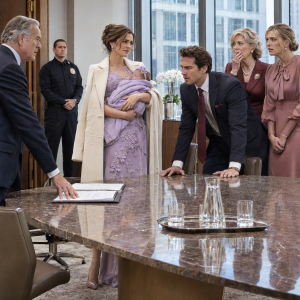
Richard asked everyone to sit. I took the chair opposite Peter, with Helen beside me. Richard had a copy of the property records in front of him.
“I understand there are questions about who owns the estate,” he said.
“There shouldn’t be,” Madeline replied. “This has been our family home for generations.”
Helen placed the deed and company ownership records on the table.
“Mr. Ashford, these documents answer the question.”
Richard put on his reading glasses. He studied the first page, then the next. When he looked up at Peter, his face had changed.
“Son?”
Peter said nothing.
Richard turned to me.
“Nora, what does this mean?”
“It means the estate is owned by my company.”
What a Home Is Worth
No one spoke.
Madeline let out a short, disbelieving laugh.
“That’s impossible.”
Helen pointed to the ownership records.
“The estate is legally owned by Bennett Field Holdings. Nora controls the company.”
Elaine looked at Peter.
“Tell them this is ridiculous.”
Peter stared at the floor. Then he looked at his father.
“It’s true.”
Madeline’s face shifted.
“You bought our house?”
“My company did, when the mortgage was in default,” I said.
Richard removed his glasses and leaned back. It took him a moment to understand not just that the company owned the estate, but that I had been the person who had kept it from foreclosure.
“You told us an investment group arranged the solution,” he said to Peter.
Peter lowered his head.
“It was an investment company.”
“Owned by Nora,” Richard said.
“Yes.”
Madeline turned to me.
“You let us believe Peter saved the house.”
I held her gaze.
“Peter asked me not to tell you.”
“And you agreed?”
“I did. I wanted to protect your family’s dignity. I thought that was what love required.”
“You’ve been deceiving us.”
“I allowed you to misunderstand who was helping.”
I could hear my voice clearly. It didn’t need to rise.
“You called me a burden while living in a house my company purchased. You told relatives I had never accomplished anything. You criticized my parenting while I paid to maintain this property.”
Madeline’s lips parted, but no words came.
“I didn’t buy the estate to punish you,” I continued. “Peter told me you were about to lose it. I thought preserving it would help the family.”
Richard closed his eyes briefly.
“I should have asked more questions.”
Madeline turned toward him.
“Don’t encourage this.”
He looked at her.
“We don’t own the house, Madeline. The documents are clear.”
She stared at him, then at the papers.
“We’ve lived here for forty years.”
“That doesn’t change who owns it,” he said.
Helen explained that the family had permission to remain under a written residential agreement. No one was being asked to leave that day, and any change would be handled through the proper legal process. The terms would be reviewed, and the family would have time to seek independent advice.
I had no interest in having an elderly couple forced from their home. I wanted the threats to stop and the truth to be acknowledged.
Madeline sat down. For the first time, she looked uncertain.
Grant asked about Peter’s business and the suspended credit facility. Helen explained that the lender was reviewing the company’s financial reporting. Existing agreements remained in effect, but I would not provide additional voluntary funding to maintain the appearance that Peter’s company was entirely self-financed.
Peter looked at me.
“I thought you’d keep supporting us.”
That word stayed with me: us. When Peter needed money, us meant we were partners. When he received praise, he had built everything alone. When his family mocked me, us disappeared.
“Your business has obligations,” I said. “My advisers will honor the agreements that legally bind us. But I won’t keep making extra contributions to preserve an illusion.”
Richard read through the records. There were details of the original financing, payroll support, the guarantee, and the terms of the revolving facility.
“And the household expenses?” he asked.
“Those were paid through a trust I established.”
Madeline looked up.
“The greenhouse?”
“Yes.”
“The gardeners?”
“Yes.”
“The roof repairs?”
“Yes.”
Her expression changed as she understood how many things she had credited to Peter.
Richard lowered his head.
“All these years.”
“I didn’t need public recognition,” I told him. “I wanted to be treated with basic respect.”
He looked at me.
“I’m sorry.”
It was a quiet apology, without excuses. I nodded.
“Thank you.”
Peter stood and moved around the table.
“Can we talk about our marriage privately?”
“Our marriage will be handled through our attorneys.”
“Nora, please.”
His voice cracked in a way I had never heard before. He stopped several feet away.
“I didn’t think you’d actually leave.”
I believed him. That was part of the sadness.
“You told me to disappear.”
“I was angry.”
“Miles heard you.”
Peter looked down.
“I know.”
“He asked whether he had done something wrong.”
His face tightened. He seemed to understand, at last, what his words had done to our son.
“I didn’t mean for that to happen.”
“But it did.”
He said he was sorry and asked whether he could see Miles. I told him we would arrange visits through the proper parenting process. Miles loved his father, but Peter would need to respect his allergies and keep adult disagreements away from him.
“An apology doesn’t restore trust,” I said.
Peter nodded. He had no answer.
The meeting ended. Helen gathered the documents while Richard walked us to the entrance.
“Nora?” he said before I stepped outside. “Thank you for saving the house.”
I looked back toward the drawing room, where Madeline remained at the table.
“I hope you’ll remember the house was never more important than the people living in it.”
Richard nodded.
Outside, sunlight reached the fountain, and water moved gently over the stone basin. It looked just as it had the afternoon I left. But this time no one followed me or questioned whether I belonged.
Over the next several months, the legal arrangements moved forward. Peter cooperated with the lender’s review and reorganized his company’s finances. It continued operating, but under tighter limits and without promises of unlimited support from me. Richard and Madeline eventually agreed to move to a smaller home. The transition followed the written agreement and the proper legal process.
Madeline never gave me the apology I once hoped to hear. I stopped waiting for it. Elaine sent a brief message saying she had misjudged me. Grant kept his distance. Richard occasionally asked about Miles and spoke to me with respect.
Peter and I established a structured parenting arrangement while the divorce proceeded. I made sure Miles’s allergies were taken seriously and that disagreements stayed between adults. Peter began following those boundaries. I couldn’t know what kind of father he would become, but I no longer believed protecting him from consequences would help him become the father Miles needed.
Joanna visited often. I returned to work on investments I had set aside and spent my afternoons with my son. We went to the park, baked safe cookies, and made paper stars to tape above his bed.
The apartment in Evanston stopped feeling like a temporary refuge. It became our home.
One evening, Miles and I sat on the living-room rug while he built a little house from wooden blocks. The walls leaned to one side.
“Mommy, it keeps falling.”
“Maybe the bottom needs to be stronger.”
He studied the blocks and carefully rebuilt the foundation. This time, the walls stayed up.
“Look! It’s safe now.”
I watched him place the roof, then steadied the last block with my finger.
“Yes, sweetheart,” I said. “It is.”