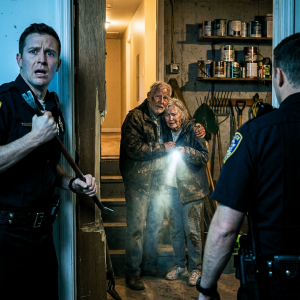
Heller asked routine questions, when Victor had last seen the girl, whether he knew she had been wandering alone. His answers were smooth, almost rehearsed. Marianne’s eyes scanned the room. A collection of children’s DVDs stacked neatly by the television caught her attention. Odd, for a man who lived alone.
“Would you mind if we had a look around?” she asked.
His jaw tightened. “Should I be speaking with a lawyer?”
“You’re not under arrest,” Heller replied calmly. “We just want to clear things up.”
In that instant, Victor’s eyes darted toward the hallway. Marianne caught it, a reflexive flicker that told her more than words.
When they returned later with a warrant, the facade collapsed. Hidden drawers yielded small toys with no explanation. A locked cabinet held notebooks filled with grotesque sketches. The worst discovery was on a hard drive tucked inside his desk, photographs that stripped away every remaining doubt.
Victor was arrested before nightfall. He insisted he was being framed, that the evidence had been planted. But the mask he had worn so convincingly was shattered, and beneath it lay something cold and predatory.
The trial that followed stretched nearly a year. His attorneys painted him as a dedicated firefighter, a community hero, the last man anyone should suspect. But digital records, medical testimony, and eventually the accounts of other children silenced the defense.

Annelise herself had to testify. In the courtroom, clutching her patched up bear, she sat just meters away from the man who had betrayed her trust. When asked why she had finally spoken out, her voice was steady though faint. “Because he promised it wouldn’t hurt, but it did.”
The jurors shifted uneasily, some lowering their eyes. That simple statement carried more weight than all the lawyers’ arguments.
Victor Dubois was sentenced to life imprisonment without the chance of release. The verdict brought a form of justice, though not the kind that heals scars. For Annelise and her mother, healing became a long road marked by therapy, sleepless nights, and the slow rebuilding of trust.
Months after the trial, Inspector Keller visited them at the grandmother’s countryside home. Annelise was coloring on the porch, her bear now carefully stitched. The autumn air smelled of apples and smoke.
“Do you feel safer these days?” Marianne asked quietly.
The girl paused, looking up with eyes clearer than before. She nodded. “Safer. But I don’t believe in promises anymore.”
Marianne had no answer. Some truths linger beyond words, carved into memory like scars on stone.
The case haunted the detectives long afterward, not only for its brutality but because of how ordinary the monster had seemed. Evil, Marianne thought, does not always wear a frightening face. Sometimes it smiles from a uniform, a trusted role, a familiar doorway. And sometimes it takes the broken words of a child to strip that disguise away.